
The Whisky Highball
A minimalist cocktail with layered heritage: from Scotch & Soda to Japanese precision and preppy cool. Read on to explore its journey and how to evolve its flavour in full and mid-strength drinks.

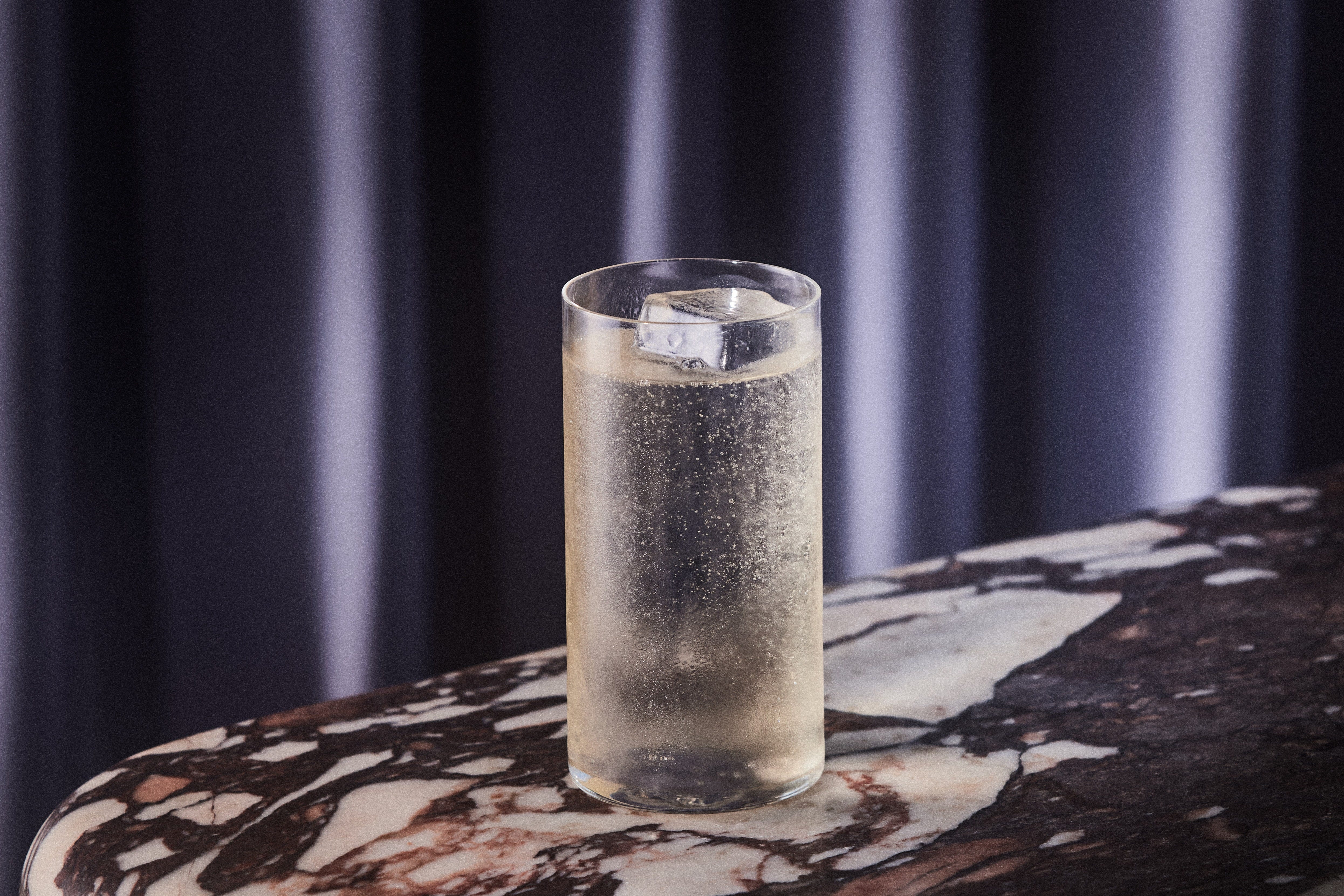
Name: While the Whisky Highball is the name most often used and associated with a Japanese whisky base, the serve descends from the older Scotch & Soda. The geography of the spirit may shift, but both drinks rely on whiskies with a lighter flavour profile and crucially, the lift of soda water.
Overview: The Whisky Highball has been quietly working its way through the cocktail ranks. It’s not a common cocktail on menus, at least outside of Japan, but as this recent Esquire article notes, that is beginning to change. The article credits Gen Z, with a preference for lower-ABV drinks, for choosing the Highball as an alcoholic alternative. But what else is impacting the popularity of the Whisky Highball?
The Scotch & Soda emerged in Britain and America in the late nineteenth century and by the early 1900s it had become one of the most fashionable drinks in the United States. It was in Japan that the serve was refined into a white-collar ritual, championed by Suntory using their whisky in the Highball. From an aesthetic standpoint, this journey is compelling: cocktails that travel, adapt and build a new sensory language tend to connect with people in ways that go beyond the four walls of a bar. This makes the Whisky Highball’s origin story central to its renewed appeal.
Thanks to the Scotch & Soda, there is a trace of the preppy in the Whisky Highball. And interestingly, much like the way Japanese menswear pioneer Kensuke Ishizu impacted American Ivy and preppy style, this drink has also been polished through a precise Japanese lens. With preppy back in fashion, it’s no wonder the Whisky Highball is drawing attention - I’m keeping my eyes peeled for a Scotch & Soda revival.
Flavour-wise, this cocktail’s profile is spirit forward and contrastingly, low in intensity on the palate, making it an approachable yet refined drinking experience. Though totally different to the Martini, it runs a parallel: both cocktails keep sugar and acid levels low, both deliver an aromatic experience, and both lend themselves to creative contemporary cocktail spins.
Category: Long drinks
Typical Structure: One part whisky to two parts soda, built over ice in a highball glass.
Typical Flavour Profile: Japanese whisky provides us with notes of cereal, subtle green-orchard fruit and a touch of tropical fruit. Sweetness and sourness in this cocktail are low. Overall, this creates a lean and precise flavour with a mouthfeel that is crisp: partly from the whisky’s clarity, but also from the fizz of the soda water.
Flavour Intensity: On a ten-point scale from light to robust, I rate this cocktail at 4. There is a clear whisky presence, yet its simplicity means the drink reads as light. It’s much softer than stirred spirit-focused cocktails and far less intense than shaken sours or bittersweet aperitif style drinks.
Ideal Drinking Moment: Because of its approachable flavour intensity and low sugar and acid levels, the Whisky Highball suits a variety of occasions. If you’re looking for a cocktail to take time sipping, stick to for the night or enjoy with savoury-focused foods, then this is your go-to.
Notes on Evolving This Cocktail: If you are a cocktail maker working in the minimalist camp, the Whisky Highball is a dream to evolve. Its structure relies on respecting the whisky’s profile and taking a less-is-more approach. This can be challenging: my method is to look for the flavour ‘gaps’ to work within and test a few small adjustments. Here, sweetness and acidity are natural starting points.
While sugar is often demonised, a touch of it can smooth a cocktail’s edges and hold the drinker’s attention - our brains are wired to seek sugar for survival. Most cocktails include sugar somewhere: liqueurs, syrups, fruit juice, even the dry vermouth in a Martini. Adding a minute amount to a Whisky Highball isn’t about making it sweet; it’s about using sugar’s softening effect on alcohol to create a more seamless sip. The key is restraint. Use just enough to smooth, not enough to taste sweet. 1.25ml of sugar syrup will integrate the experience of the whisky into the soda. If you introduce other sugar-containing ingredients, be mindful of how the sweetness reads.
I also like to explore the absence of acidity and how, like with sugar, it can be added. Acidity creates a mouthwatering experience, and a small splash can add dimension without breaking the drink’s clarity or dryness. To keep the whisky’s profile intact, I like to focus on non-citrus based acids - citrus brings an additional aromatic ‘pop’, which I only add with intent.
I look to Japanese ingredient suppliers for inspiration: rice vinegars, fruit vinegars and aged vinegars are all of interest and open doors to more experimentation. This leads naturally to aromatics, another key area to explore.
Three directions worth investigating and based upon the whisky’s profile are: warmer malted notes that add depth; tropical fruit notes for subtle body (watch the sweetness here); and the more piquant green botanical and citrus notes that bring brightness. I’m slightly obsessed with ordering spices and seasonings from The Wasabi Company - a twice-yearly bulk order often sparks new ideas. Sansho pepper, yuzu kosho, green plum and koji have all made it into my Whisky Highball cocktails. There is much fun to be had in the seeking and tasting!
Finally, this is a minimalist cocktail in look as well as taste. Served in a thin-walled highball glass, often over a block of ice so clear it almost disappears. For that reason, I try to preserve the clarity of the liquid and its soft golden hue. This puts a constraint on my approach but I like the challenge and the surprise it gives guests - the sparse appearance hides a layered and carefully built drinking experience.
No, Low & Mid Considerations: I completely understand why this cocktail attracts drinkers used to lower-ABV experiences, but it’s worth noting that a serve of one part 40% ABV whisky to two parts soda still lands at around 13% ABV. That’s lower than a Martini or Margarita, but it’s far from low-alcohol. To move the Whisky Highball into the low-ABV space we’d technically need to hit an ABV of 1.2% or below - a tall ask for this cocktail because of its focus on the flavour of whisky. So, let’s turn to the mid-strength opportunity we have here.
Mid-strength is yet to be legally defined, but industry leaders and producers are researching consumer habits and helping to shape this. As it stands, the working definition for a mid-strength, spirit based drink is around half the ABV of full strength. Let’s reduce the measure of whisky to 25ml and see what other ingredients we can use to bolster the flavour.
Taking flavour profile learnings from our evolved cocktails, leaning into ingredients with slight malted notes and crisp freshness is logical. I firmly believe you can make almost any tea work in this drink - the range of varietals mean we can find the earthy and smoky with Pu-erh and Lapsang Souchong; the malted with Assam or Hojicha; and the crisp and bright with a Ceylon or Oolong. Sencha can work, but be cautious of how it is dosed and extracted as it can become quite astringent.
On extraction methods, one option is to add the tea directly to the whisky and allow it to infuse at room temperature. This will produce lighter, refined results, and a little tea goes a long way. Alcohol is highly effective at extracting flavour, including tannins, which you’ll need to look out for and balance. It’s why I often prefer a cold extraction, which keeps tannins in check. You could take the same approach and extract into your chosen vinegar. You might prefer a higher dosage of tea, as you’re likely adding a lower volume of vinegar than whisky, but it can be interesting to compare results. Another route to explore is to brew the tea as directed and turn this into a sugar syrup, which provides a more robust flavour. Look at the concentration of tea and balance the sugar level correctly; remember less can be more.
While tea will bring its own aromatics, these can be amplified and expanded with green spices and botanicals, citrus peels or tropical fruit additions. All can be added to infusions or syrups, or worked as a garnish: adding that appealing first impression to your drink.
Final Thoughts: As we’ve explored a little of the Whisky Highball’s history and technique, it feels fitting to end with a cultural note. Kensuke Ishizu was instrumental in introducing and reinterpreting Ivy League and preppy style in Japan. In 1951 he founded VAN Jacket, a brand that adapted American campus style dress - button-down shirts, blazers, chinos, loafers - for a Japanese audience. His vision sparked the ‘Ivy Boom’ of the 1960s and created a bridge between two cultures. His book Take Ivy (1965) remains a reference for modern preppy style.
If you’re keen to learn more, I recommend W. David Marx’s book, Ametora: How Japan Saved American Style, and the great podcast by Articles of Interest: Season 3 American Ivy, which discusses the origins of American Ivy and the impact of Take Ivy and preppy. Articles of Interest also has a Substack